
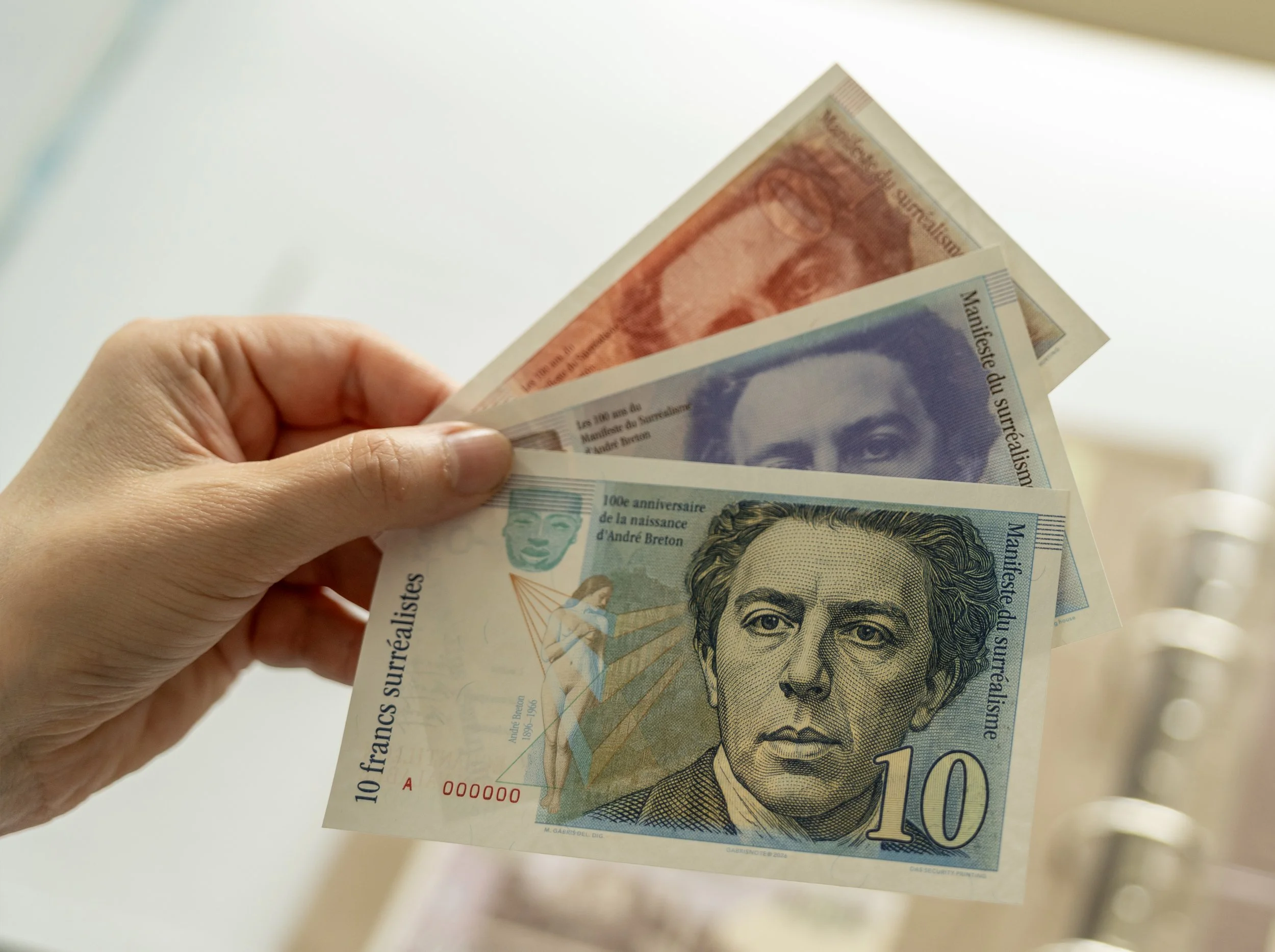
Breton’s heritage in the work of Matej Gábriš
There are only few figures in the history of modern culture who have so radically transformed the perception of reality as André Breton did. In 1924, he published the Surrealist Manifesto (Manifeste du surréalisme), heralding a new chapter in art and culture. He himself was marked by the traumatic experience of World War I and sought to find the key to understanding the human mind in the theories of Sigmund Freud. He was fascinated by psychoanalysis and explored the subconscious. This became for him a vast reservoir of unlimited creative imagination. Breton attempted to merge two seemingly contradictory states—dream and waking reality. He called this new “state” of a higher, absolute reality “surreality.” He rejected pure rationalism as well as “bourgeois” logic. Breton understood surrealism as “pure psychic automatism,” a process free from any aesthetic or moral censorship. But how and why did this radical intellectual legacy find expression in the work of the Slovak visual artist and designer Matej Gábriš?
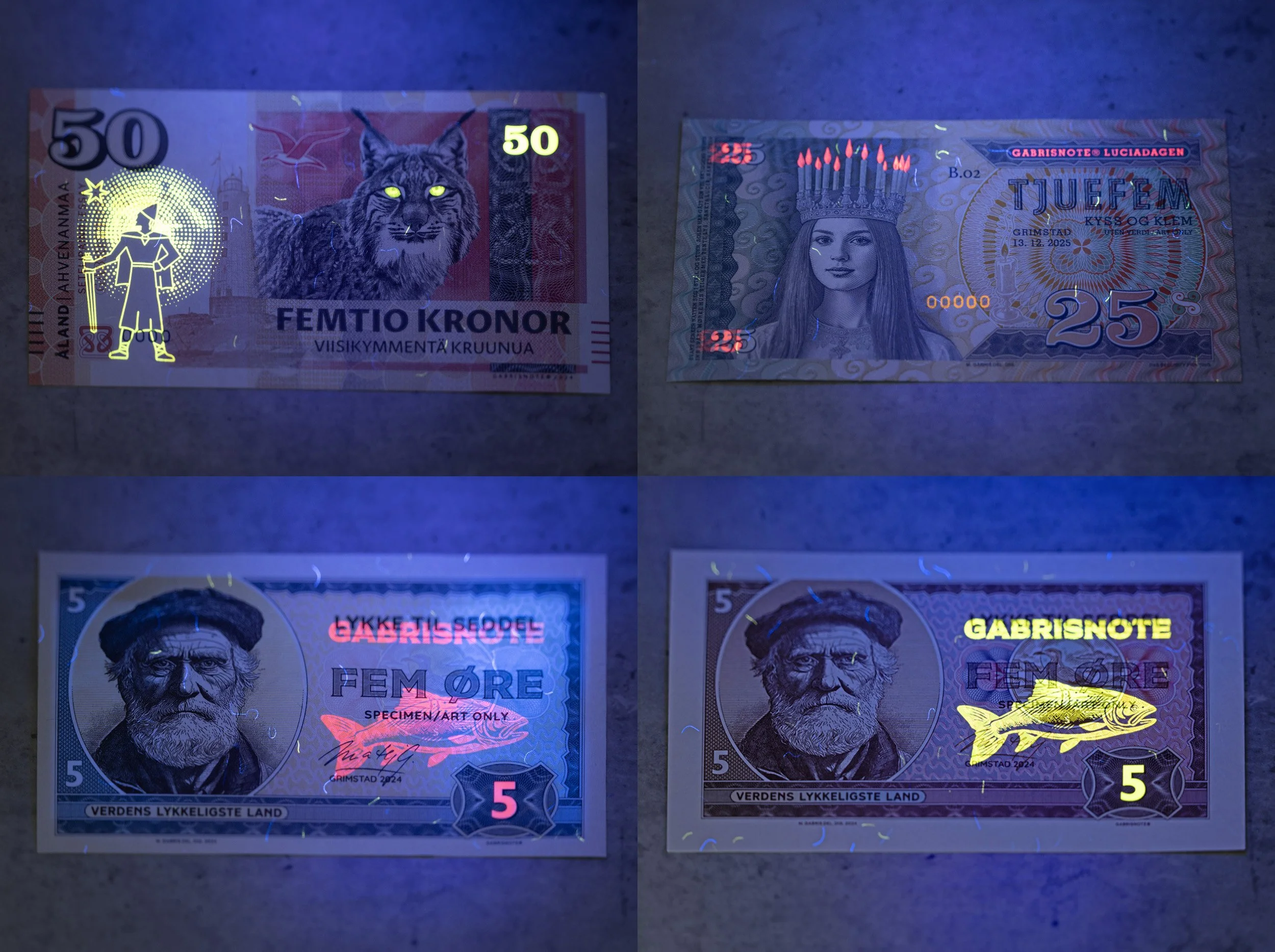
Technological Depth and Hidden Layers of GABRISNOTE®
Creating a visual work that aims to communicate in a large format requires unquestionable talent and a feel for composition. However, transforming a miniature piece of paper, which easily fits in the palm of your hand, into a complex, layered work of art with strict technological parameters requires absolute mastery and a deep knowledge of printing disciplines. Security design represents a specific field of fine art that does not forgive the slightest hesitation. The thickness of each individual line, the mathematical precision of guilloche networks, color registration, and the material substance of the paper play more than just a decorative role here. In the context of the lifelong GABRISNOTE® concept, these technical elements are an integral part of an artistic language that deepens the illusion of sovereignty and transforms ordinary printed paper into a fascinating collector's artifact.
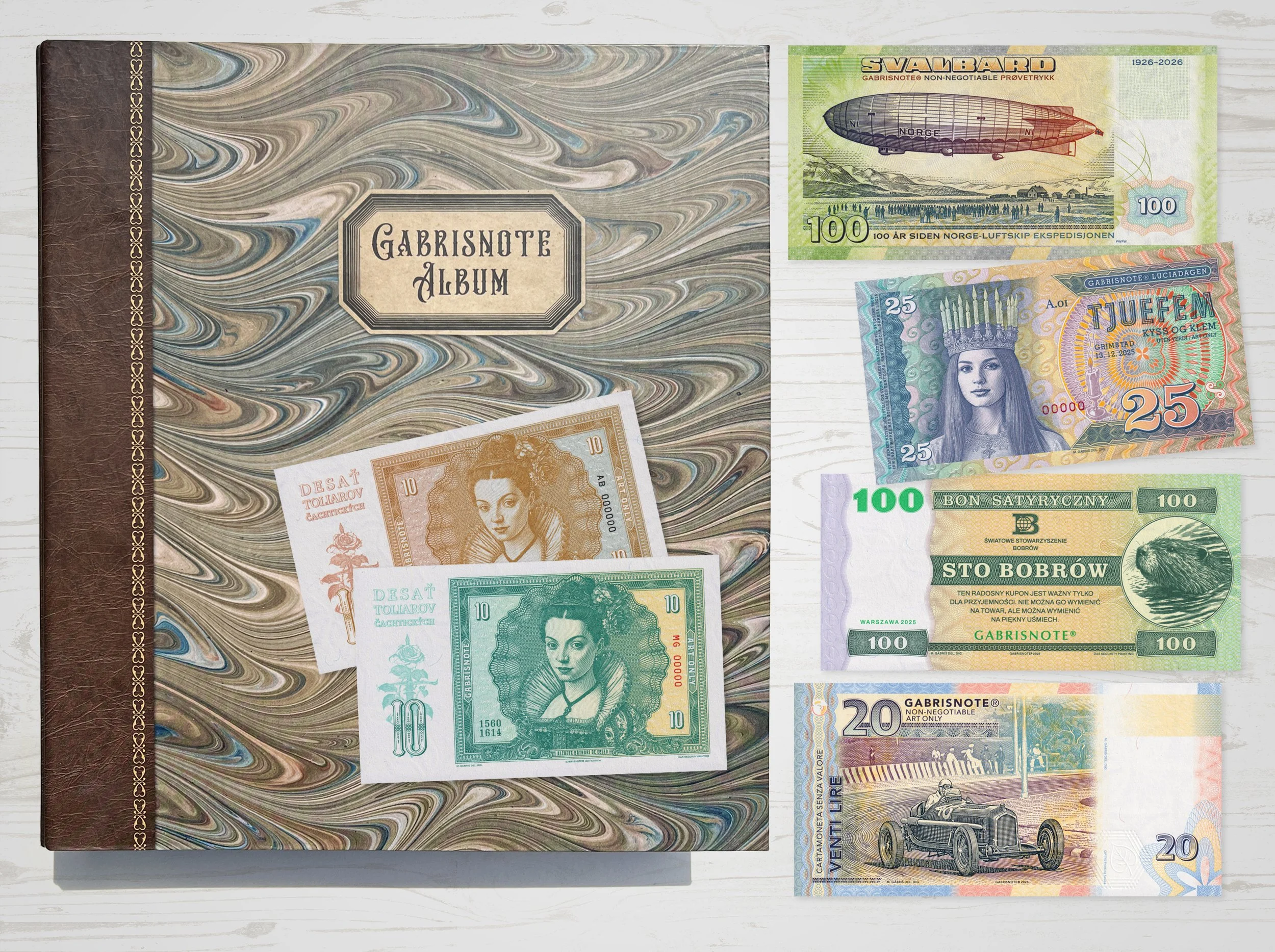
The Phenomenon of Fantasy Notes in Art and Notaphily
Have you ever stopped to think about what you actually carry in your wallet besides payment cards? Banknotes. Money. From a purely physical standpoint, it is merely a blend of cotton, paper, and ink, which in itself holds no real value except for the one we, as a society, have collectively agreed upon [1]. Money is essentially humanity's most successful fictional medium of exchange. But what happens when this strictly guarded social contract is disrupted by artists? Fictional banknotes, known in international terminology as fantasy notes, represent a unique phenomenon where the austere world of mathematics and finance collides with human imagination and the desire for beauty.